
Studying the Japanese alphabet kanji may seem like a major task when you start your Japanese language learning. With thousands of characters and readings as well as deep cultural associations, Kanji seems like a difficult subject, but you can master it concept by concept. This guide will take into consideration what you need to know about the Japanese alphabet, kanji and provide straightforward, realistic tips on how to quickly gain confidence as a beginner.
Whether you are a casual learner, looking to learn Japanese on the side, or serious about learning, this can be your first step toward reading and writing with ease.
What Is Kanji? Understanding the Basics
The Kanji Characters in Japanese were originally written in ancient Chinese from the time of China’s early history, which later became adapted into the Japanese language over a few centuries. Today, these scripts make up one of the three writing systems in Japan – Hiragana, Katakana and Kanji. Unlike in phonetic scripts, meanings are coded in each Kanji, which enables you to draw a direct image of the context. That is the reason why kanji (Japanese alphabet) is essential to read newspapers, novels, menus, signboards and documents in Japan.
There are more than 2,000 regular Kanji that everyone learns at some point. But don’t fret — you don’t need to learn them all at once. To help you move along, let’s break them down by levels.
Why Beginners Should Learn Kanji Early?
Some students are delaying learning Kanji and first by just learning Hiragana and Katakana. But learning the Japanese alphabet and kanji early on lays a much stronger foundation. Here’s why:
- Kanji improves comprehension quickly
- It is useful to avoid confusion of such visually similar words
- It helps get you off course to reading real Japanese materials quicker
- For vocabulary, kanji combines words with the same roots into a single character.
For example, when you learn the character 学 (gaku – study), you know how to read 学生(student), 学校(school) and 学習 (learning). That’s why learning the Japanese alphabet kanji will help you greatly.
Easy Tips to Start Learning the Japanese Alphabet Kanji
1. Begin with Everyday Kanji
Begin by learning easy Kanji that are used in our daily life, such as numbers (一, 二, 三), days of the week or some basic nouns like 山 (mountain) and 水 (water). These characters are very frequent, thus easier to recall their shape and meaning.
2. Break Kanji into Radicals
Radicals are the basic elements of Kanji. Learning radicals will make kanji, the alphabet part of Japanese, a lot simpler to learn, as you’ll be able to see what more complex characters are built of. For instance, the radical 氵is frequently associated with water, as can be observed in 海 (sea), 河 (river) and 泳 (swim).
3. Use Mnemonics
Visual stories help you remember shapes. 木 (tree), for example, they look like a tree. Combine two trees together, and you have a forest (林). Translating pictures into memories makes the Japanese alphabet kanji easier to learn.
4. Learn Onyomi and Kunyomi Gradually
Kanji readings are of two types – Onyomi (Chinese) and Kunyomi (Japanese). Don’t try to memorise everything at once. Concentrate on one common reading initially, and then build slowly.
5. Write Kanji to Strengthen Muscle Memory
Kanji writing is great for learning stroke order and structure. Write each Kanji at least 5–10 times for each. Regular writing practice enables you to easily recognise and memorise the Kanji in Japanese alphabet.
6. Study Vocabulary, Not Just Characters
You cannot understand a kanji without words. Learn little vocab sets rather than just characters. For example, 食 (eat) becomes 食べる (to eat), 食事 (meal), and 食堂(cafeteria). This is what makes the Japanese alphabet kanji so useful.
7. Use Flashcards and Apps
Software such as Anki, WaniKani and JLPT Kanji reinforces spaced repetition. Flashcards assist you in recollecting the Japanese alphabet kanji every day, which makes learning uncomplicated.
8. Read Simple Japanese Texts
Begin with children’s books, manga or easy Japanese reading websites. Exposure to make the kanji Japanese alphabet familiar in a real context.
How Kanji Fits into the Japanese Writing System?
The Japanese written language is comprised of Kanji, Hiragana and Katakana. Hiragana is for the grammar, Katakana stands for complete foreign words, and Kanji gives you meaning. The result is both structure, clarity and flow in the language. Due to long sentences/passages of the novel full of Kanji, beginners may feel stressed to read it, but as you understand and make a pattern of that, it’ll bring another joy for reading.
Kanji, a part of the Japanese language, has an important role in decreasing confusion. Your Japanese has a ton of homophones — that is, words which sound the same but have different meanings. Kanji just makes it easier to distinguish these words at a glance. This is one of the main reasons why students appreciate the Japanese alphabet, kanji, so early in their learning.
Japanese Culture and Kanji Connection
Japanese symbols and Kanji are rich in culture; they symbolise the tradition, philosophy, or history. Hundreds of characters originated as pictures of physical objects, human activities and the elements of nature. For instance, the Kanji 心 (heart) is used in a great variety of emotion concepts like 心配 (worry) or 心理 (psychology). You learn kanji and get a feel for the culture, not just language. As you probe the Japanese alphabet kanji, you touch hundreds of years of Japanese lore and tradition.
Best Method to Learn Kanji Quickly
Study Japanese Kanji with a structured approach:
- Focus on JLPT-level Kanji
- Study radicals first
- Memorise with visuals
- Use spaced repetition
- Apply Kanji in sentences
- Read frequently
This methodology gives you confidence to work your way through the Japanese alphabet kanji until even tough characters turn into easy ones.
Kazumi Japanese & Cultural School

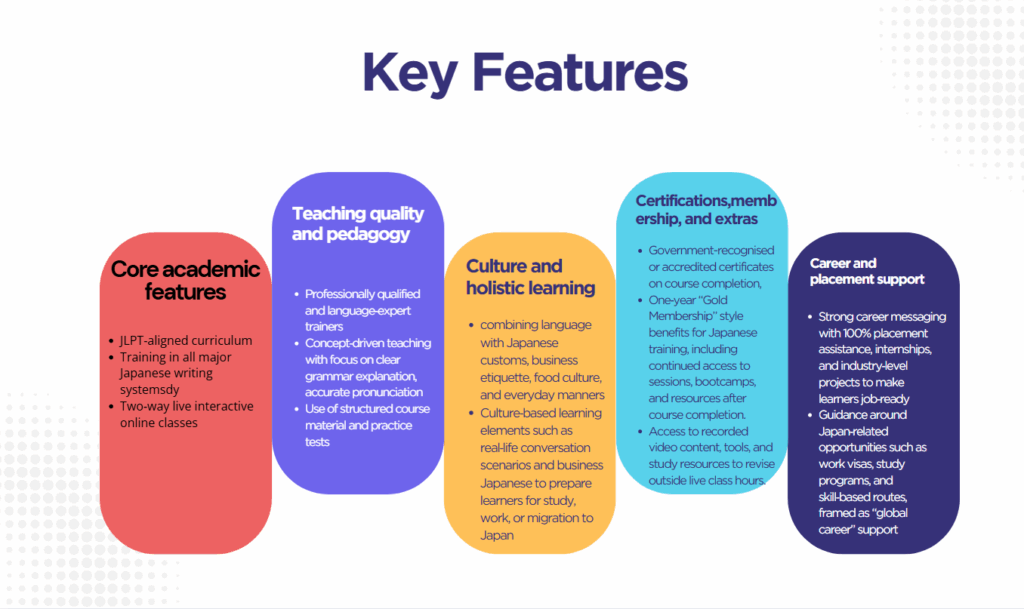
Kazumi Japanese & Cultural School by Henry Harvin is one of India’s premier institutions for learning the Japanese alphabet, Kanji and the Japanese Language. The Kazumi Japanese & Cultural School offers expert-led classes of all levels from N5 to N1 with structured courses, cultural training, JLPT-focused preparation and also online flexible lessons. Highly-qualified native and Indian faculty teach Kanji, grammar, vocabulary, and Japanese communication in an enriched environment. Kazumi also provides internships, online learning, study abroad assistance and real-time advice for students. If you like a solid grounding in Japanese and easy movement through your Japanese alphabet kanji, Kazumi Japanese & Cultural School is a great one to pick.
Conclusion
Learning the Japanese alphabet kanji is no small feat, but with regular practice, the right resources, and some smart strategies, you can learn them in no time. Just concentrate on those basic characters, keep learning radicals, and write and read Japanese stuff daily. And each step along the way will also make you a more adept reader of “real” Japanese. Kanji is more than a writing system—it’s a gateway to culture, communication and a greater understanding of Japan. With a bit of time and continued study, the language of the Japanese kanji alphabet becomes more than learnable – it becomes downright fun.
Recommended Reads
- 100+ Most Common Japanese Words Every Beginner Should Know
- A Complete Guide to Japanese Grammar for Beginners
- How Long Does It Take to Learn Japanese? (Simple Explanation)
- Top 10 Japanese Language Proficiency Test (JLPT) Preparation Tips
- How to Write Japanese in Japanese: A Step-by-Step Guide
FAQs
It can sound daunting at the beginning, but if you learn Japanese kanji with dedicated practice and user-friendly Kanji lists for beginners, anyone can memorise it in a short time.
Beginners should begin with roughly the first 100-150 kanji, which are essential characters in JLPT N5 and work up from there as you become more confident reading Japanese script.
No, start with one common reading and add additional ones slowly while studying kanji in vocabulary.
With daily practice, learners can finish basic Japanese alphabet kanji in a few months and be at an intermediate level within one year.
Learn some easy learning techniques like spaced repetition, handwriting characters, studying vocabulary, and reading simple texts to reinforce your knowledge of the Japanese alphabet kanji.